51job
南海的真实现状,我国已收复40多个岛屿,却只做不说,一个话家,原创 南海的真实现状,我国已收复40多个岛屿,却只做不说,惊涛之下见定力,礁盘之上显匠心,谈判桌前谋长远_我的网站

一 | 刷到一张卫星图的时候,我盯着看了好久。 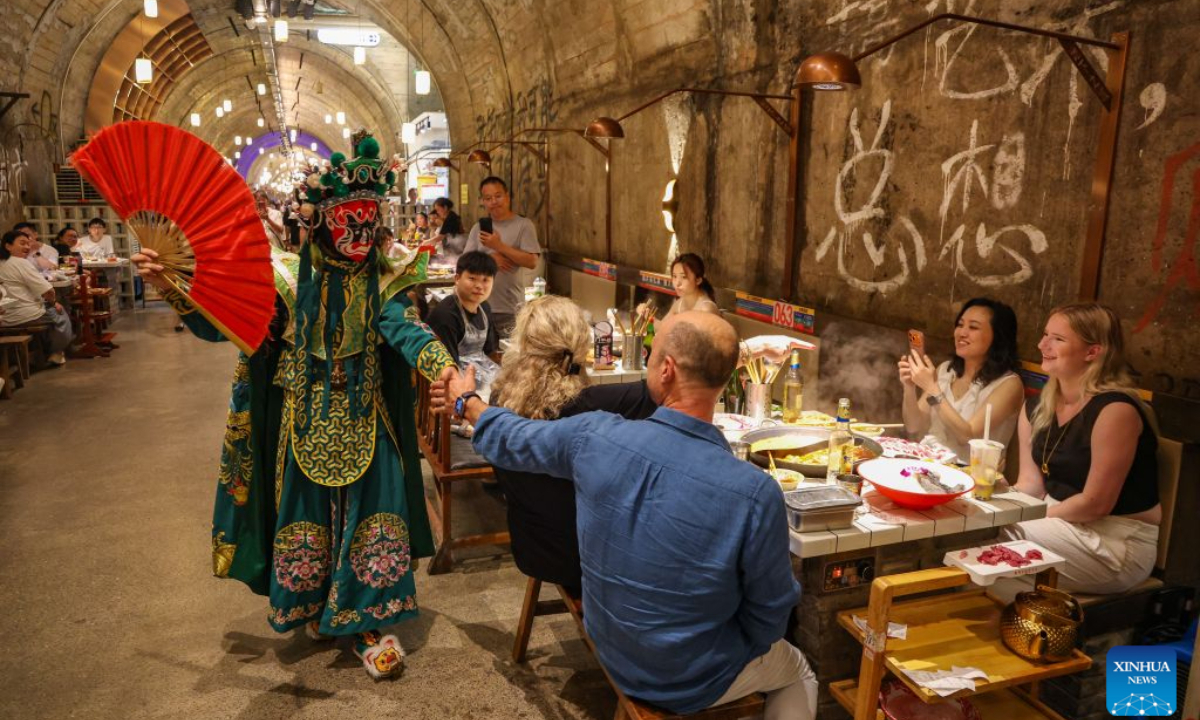 Foreign tourists enjoy hotpot while watching a Sichuan Opera face-changing performance inside a former air-raid shelter at the Underground City hotpot restaurant in Liangjiang New Area of southwest China's Chongqing Municipality, July 10, 2026. (Xinhua/Huang Wei)Despite outdoor temperatures nearing 40 degrees Celsius in southwest China's Chongqing Municipality, Australian tourist Roy Rostand was enjoying hotpot at a restaurant without air conditioning, apparently feeling no discomfort from the summer heat.
The answer to his comfort lies in the restaurant's unlikely location. This hotpot restaurant, named Underground City, is hidden inside a former air-raid shelter, one of the city's distinctive spaces offering natural coolness.
"It's amazing that the restaurant stays so cool even in scorching summer heat," Rostand said. "Chongqing has given me the chance to experience something I can't find in Australia."
Chongqing has long been dubbed one of China's "furnace cities" for its sweltering, humid summers. In July alone, the city endured 26 consecutive days of high heat, with temperatures breaching 40 degrees Celsius for a full week and topping out at a scorching 41.6 degrees.
The blazing heat, however, has failed to dampen the enthusiasm of global travelers. According to the Chongqing General Station of Exit and Entry Frontier Inspection, more than 610,000 inbound and outbound trips by foreign nationals were recorded at Chongqing Jiangbei International Airport in the first half of the year, marking an 86-percent surge year on year. The top five source countries were Thailand, Malaysia, Singapore, Vietnam and Indonesia.
European travelers proved to be a standout growth driver. Data from Trip.com shows that as of July 21, inbound travel bookings from Europe to Chongqing for this summer season climbed by over 40 percent year on year, while scenic spot ticket orders surged by 214.7 percent and activity-based bookings rocketed by a staggering 6,900 percent.
Thanks to China's visa-free policies and other travel facilitation measures, Chongqing is rapidly gaining traction as a go-to "coolcation" hotspot for international visitors. Creative cool-off spaces, diverse travel experiences and comprehensive summer services have all contributed to its rising appeal.
UNDERGROUND COOL
Chongqing's summer cooling secrets were first found underground. Since the late 1930s, the city has carved thousands of air-raid shelters into its mountainous terrain.
Once serving as sanctuaries for civilians during the Chinese People's War of Resistance against Japanese Aggression, these spaces have now been repurposed as hotpot restaurants, tea houses and venues for Sichuan Opera performances, providing both refreshing coolness and preserving the city's living memories.
"The temperature inside the shelters remains around 25 degrees Celsius all year round, making them natural cool retreats," explained Wang Jing, marketing director of Underground City.
"We serve more than 300 tables a day on weekends," she added. "Right now, about one in every six diners is from overseas. And we're seeing more and more visitors from Southeast Asia and Europe."
Annika, a tourist from Germany, revealed that the restaurant has gone viral on overseas social media platforms. "We were attracted not only by this unique way of escaping the summer heat, but also by the opportunity to dine in a place filled with history and culture," she said.
CHASING CHILL
On August 1, Chongqing issued an orange heat alert. At a water park in its Fuling District, 10 tonnes of industrial ice were dumped directly into the wave pool. Half-submerged in the refreshing water, visitors could splash around or even play mahjong at custom-made tables in the pool.
This unique summer cooling scene has attracted coverage from mainstream media in countries including Russia and Canada, with overseas outlets reportedly dubbing it the most intriguing summer spectacle in China this year.
At Chongqing Xingrui international travel service, inquiries from cross-border travelers hailing from hot and humid regions such as Vietnam, Laos and Indonesia have risen notably in recent weeks.
Peng Hengcong, head of the travel agency, said they have rolled out themed tour products, including "cool retreats in the mountains" and "gorge rapids adventures," tailored to overseas visitors seeking summer cooling experiences. These products cover areas with higher altitudes or rich water systems in Chongqing, with the highlight being a "23°C summer" experience.
Luo Zibai, an expert with the China Tourism Academy, believes that Chongqing's sustained popularity among travelers lies in its ability to fully leverage its distinctive strengths and develop differentiated tourism products that offer a broad spectrum of experiences.
URBAN REFUGE
Chongqing is weaving a citywide "cooling network" -- ranging from shopping malls to public facilities, and from indoor spaces to outdoor areas.
At a shopping mall called The Ring in the city, visitors are greeted not by endless rows of shops, but by a lush indoor rainforest. With misting systems and carefully designed lighting, the mall keeps the temperature at about 21 degrees Celsius, creating a cool, dreamy summer escape.
"I like Chongqing a lot because it has its own character," said Bilal Badri, who was visiting from the Netherlands. "The way nature and the city's landscape blend together here is just perfect."
The cool experience extends beyond the mall. In the Mountain City Alley historic district, a 400-meter-long pedestrian walkway has been transformed into a "cooling corridor," where misting systems and shaded areas reduce the perceived temperature by 3 to 5 degrees Celsius.
In addition, since July 8, Chongqing's rail transit system has set up cooling zones in 158 metro stations, offering free air-conditioned spaces and heat-relief supplies to residents and tourists alike.
"Chongqing's creative and thoughtful ways to help people beat the summer heat are impressive. It's really interesting to discover these unique experiences," said Alexandra, a Romanian tourist. "This time I didn't stay long enough to explore more of the city, and I'm planning to come back in the near future."
。图上是南海深处的永暑礁,一条笔直的跑道横在碧蓝海面上,旁边码头、楼房、绿化带排列得整整齐齐。 谁能想到,几十年前这里还只是涨潮就没顶的一片礁盘?更让我感慨的是,这么大的动静,我们自己人里很多都说不清到底是啥时候干成的。 埋头做事、不吭声,这大概就是中国人骨子里的那股劲儿。真正把我拉进这个话题的,是2025年9月那条不算起眼的新闻——国务院批准设立黄岩岛国家级自然保护区,总面积3523.67公顷,专门保护那片珊瑚礁生态。 当时我还纳闷,好端端设个自然保护区图什么?后来才咂摸出味道来:这哪是单纯保护珊瑚,这是把管辖权从执法巡航,一路延伸到了生态治理的层面。 你在这儿划保护区、搞科考、护渔业,主权的存在就变得实实在在,谁也没法装看不见。一步棋,落子无声,却把黄岩岛这颗"南海明珠"稳稳攥在了手心。

二 | 很多人对南海的印象,还停在"我们的岛老被人占、场面挺被动"这个层面。

三 | 这话搁三四十年前,或许有几分道理;可要放到今天,就完全跟不上趟了。

四 | 先把家底摆清楚。南海是我国四大领海里最大的一个,总面积约350万平方公里,里头散着东沙、西沙、中沙、南沙四大群岛。 这些岛礁归谁,早有说法——1947年,我国以十一段线的方式明确了南海诸岛的归属;1953年去掉北部湾那两段,成了沿用至今的九段线,但群岛主权归属一直没变,当年国际上也没谁跳出来反对。理直,气就壮。 这些年真到了动手的关口,我们从没含糊过。1974年西沙海战,一仗打下来,珊瑚岛、甘泉岛、金银岛全回来了,整个西沙群岛牢牢握在手里。 1988年赤瓜礁那一战更是干净利落,永暑、渚碧、南薰、东门、华阳连着赤瓜,一口气拿下六座礁盘。

五 | 菲律宾在美济礁不死心,1995年、1998年折腾了两回,最后还是灰溜溜地退场。

六 | 到了2012年黄岩岛对峙,我们重新掌握实控权;2021年,又把之前被马来西亚盯上的琼台礁收了回来。

七 | 至于开发最早的东沙,清政府1909年就从日本人手里硬生生要了回来,主权从头到尾都是中国的。 零零总总算下来,光是1988年到现在,陆续实控的岛礁就超过了40个。可你翻翻当年的报纸、问问身边的人,几乎没人能说全。这就是"只做不说"——事儿办得漂亮,声儿却压得极低。 拿回来是本事,守得住、用得好,才是真功夫。2012年海南三沙市正式挂牌,市政府就设在西沙永兴岛。 有了这个统一的抓手,南海诸岛的管理一下子理顺了。永兴岛后来跟旁边的石岛连成一片,陆域扩到3.08平方公里,机场、码头、医院、学校样样齐全,除了守岛的人,还有近千名渔民常住。 说白了,这就是长在海上的一座小城。南沙那边的变化更让人开眼。 美济、渚碧、永暑、华阳、南薰、赤瓜、东门七座礁,先后完成吹填,新增陆域差不多13平方公里。其中永暑、渚碧、美济这三处都建了机场,彼此一呼应,围出个稳稳当当的三角布局,往北跟永兴岛遥相配合,几乎把整片海域都罩在了视野里。

八 | 我特别喜欢这里头的一种智慧——不张扬,但每一步都算得死死的。

九 | 你在礁上种珊瑚、养海龟、建气象站、修灯塔,看着是搞民生、搞科研,实际上桩桩件件都在夯实主权。 黄岩岛的自然保护区就是这个路数的延续。

十 | 海警船常态化在那片海域巡航执法,既护住了原生的美,也让"这是中国的"这句话,落到了看得见摸得着的地方。

十一 | 收回的礁、扩建的岛、划设的保护区,一环扣一环,慢慢织成了一张覆盖南海的大网。 当然,实话实说,南海的事儿还没到画句号的时候。眼下越南占着的岛礁最多,有29个,南威岛、鸿庥岛、毕生礁都在其中;菲律宾手里攥着中业岛、南钥岛、费信岛等8处;马来西亚控制着弹丸礁、光星仔礁、簸箕礁等5处;文莱则占着南通礁。 再加上域外那些爱搅局的,局面确实复杂。但化解矛盾这事儿,我们信的从来是坐下来谈,而不是掀桌子干。

十二 | 在不久前的中国—东盟外长会上,我方明确讲,南海是地区国家共同的家园,这个问题不该成为中国和东盟之间的障碍,双方完全有智慧、有本事把维护和平稳定的主导权,牢牢掌握在自己手里。东盟各国的外长也纷纷响应,都盼着能早日把"南海行为准则"谈拢,让这片海真正成为合作之海、友谊之海。 台湾地区在南海同样握有东沙、太平岛这样的重要据点,两岸在维护中华民族祖产这件大是大非上,其实站在同一条线上。写到这儿,我心里那股别扭劲儿反倒踏实了不少。

十三 | 从西沙到南沙,从海上制胜到吹沙建岛,再到如今拿生态保护、规则协商去巩固成果,中国走的一直是那条稳扎稳打的路——手里得有硬家伙,心里得存和平的念想。四十多座岛礁悄悄归位,靠的不是响亮的口号,是一天接一天的埋头苦干。 低调,不代表软弱;不说,不代表没做。

十四 | 随着"南海行为准则"的磋商提速,随着家底越来越厚,我打心底相信,这片辽阔的蓝色国土,往后的日子只会更安稳,也一定会有更多离散的岛礁,重新回到祖国的怀抱。返回,查看更多。
Current article:http://ee3yz.pisezuibanzoukou.cyou/list_9fz4al4/kkdag.html
Published on:00:00:00