普罗米修斯
生态文明建设,全国能向湖州学什么?_我的网站

一 |
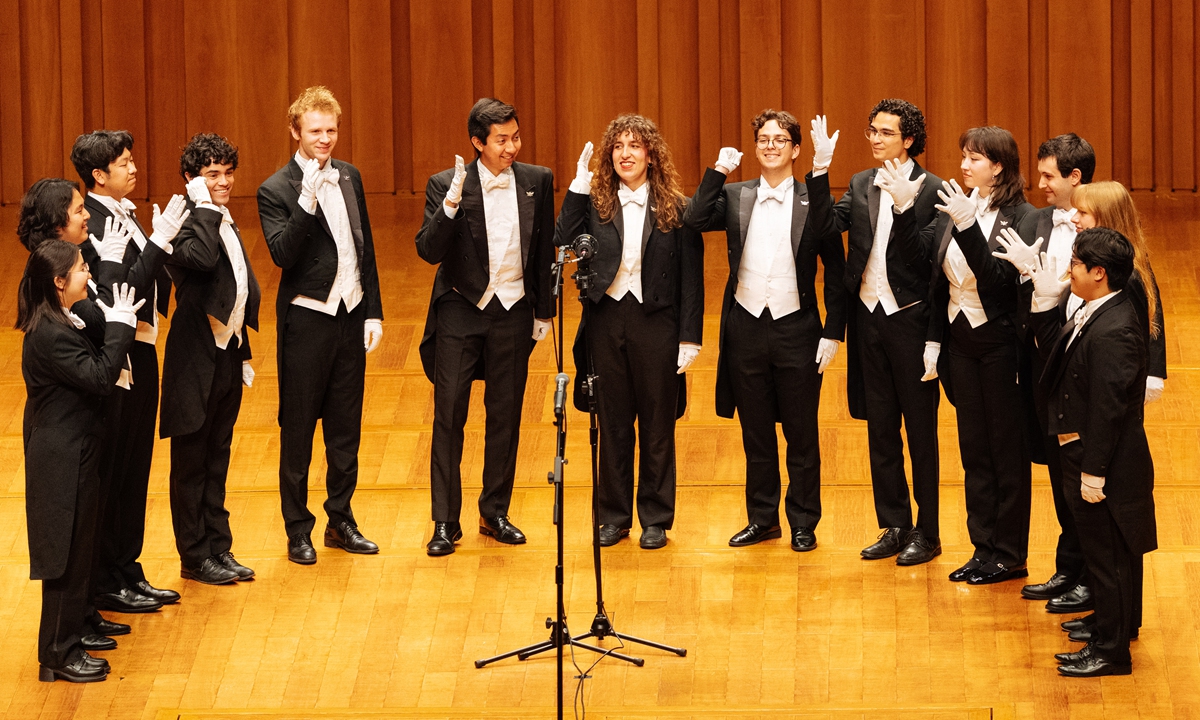
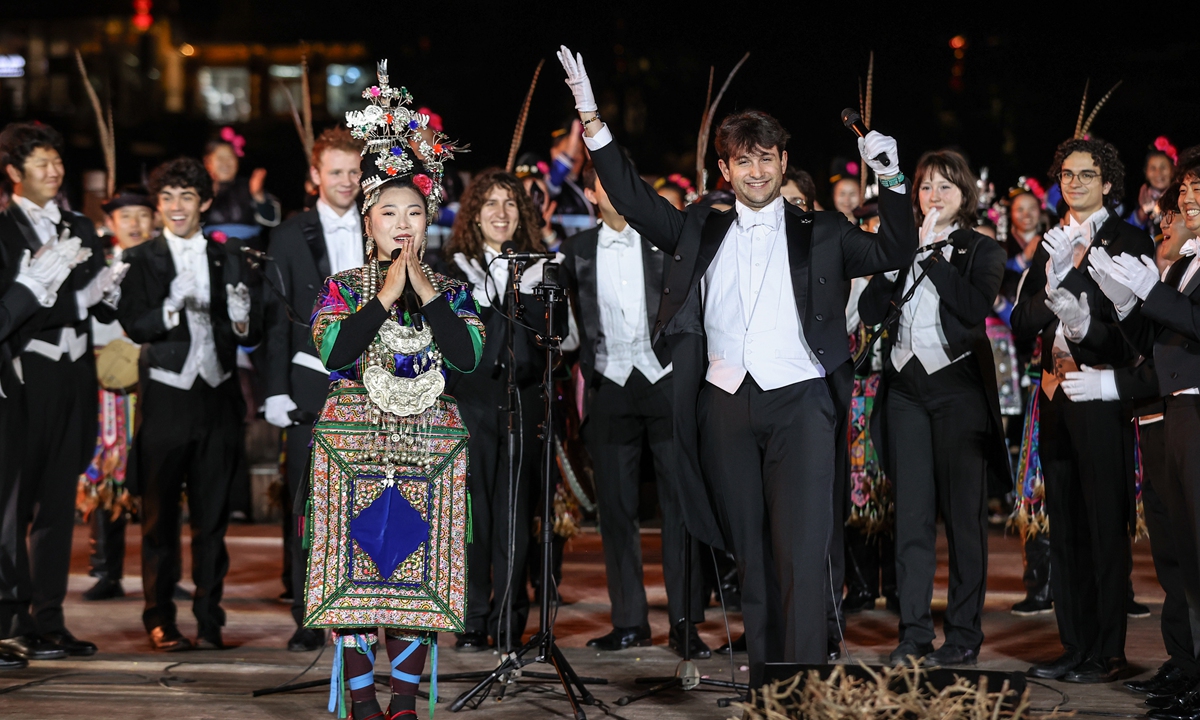
The Yale Whiffenpoofs perform at the National Centre for the Performing Arts in Beijing on August 12, 2026. Photo: Li Hao/GTThe concert appeared to be over. Yet neither the singers nor the audience seemed ready to let the night end.
On the evening of August 12 at the National Centre for the Performing Arts in Beijing, the Yale Whiffenpoofs finished their scheduled program before returning to the stage for an encore featuring three Chinese songs: the traditional folk tune "Jasmine Flower," the popular hit "The Brightest Star in the Night Sky" and "Let the World Be Filled with Love."
The singers' carefully rehearsed Chinese was soon joined by voices from the auditorium, turning the encore into a chorus shared across the hall.
The moment brought a longer journey into focus. More than four decades after the Whiffenpoofs first toured China in 1985, the current ensemble spent 15 days traveling to nine destinations across the country in March and April before returning to Beijing in August.
Founded in 1909, the Whiffenpoofs are the oldest collegiate a cappella group in the US. Each year, 14 Yale students are selected for the student-run ensemble, which performs more than 200 concerts across six continents.
Over its 117-year history, the group has counted among its members songwriter and composer Cole Porter, former US senator Prescott Bush and actor Ron Livingston.
Most of the current members are not music majors. They study subjects ranging from history and global affairs to chemistry, biomedical engineering, neuroscience and economics, but set aside a year to place music at the center of their lives.
Across concert halls, university campuses and villages, the young singers encountered people and places that could not be reduced to distant headlines or images on a screen.
Their journey was not simply about mastering unfamiliar lyrics. It was also about what could begin once the singing stopped and conversation began.
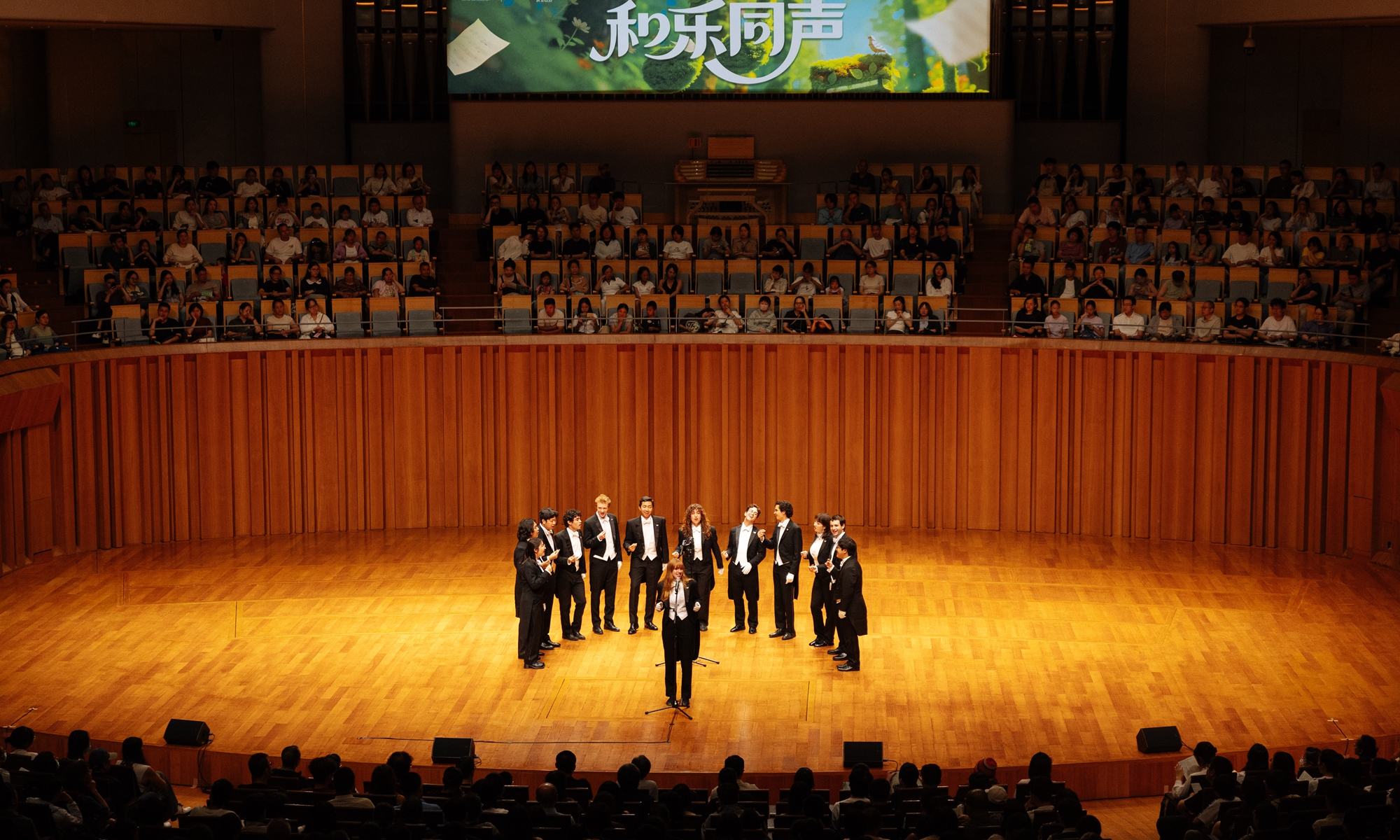
The Yale Whiffenpoofs perform at the National Centre for the Performing Arts in Beijing on August 12, 2026. Photo: Li Hao/GT
Shared voicesFor Zhang Yixiao, a 22-year-old Beijing native and the group's assistant musical director, one of those melodies carried a particularly personal memory.
Long before he left for Yale University, Zhang sang with the renowned Beijing Philharmonic Choir, founded by conductor Yang Hongnian. He also performed on the same stage during the annual August Chorus Festival.
"The Brightest Star in the Night Sky" was also a song he had grown up with - one that used to play over the loudspeakers while he and his classmates ran laps in middle school. Years later, he taught it to his American teammates and listened as a Beijing audience sang it back to them.
During the China tour, Zhang, who studies global affairs and economics at Yale, also helped his fellow singers cross a less familiar musical boundary. He selected the Chinese songs, explained their meanings and helped the group with pronunciation. The pieces were arranged by members of the ensemble.
He chose songs from different ends of China's musical landscape: "The Brightest Star in the Night Sky" represented a contemporary memory shared by many young Chinese people; "Jasmine Flower" introduced the group to one of the country's most recognizable traditional melodies.
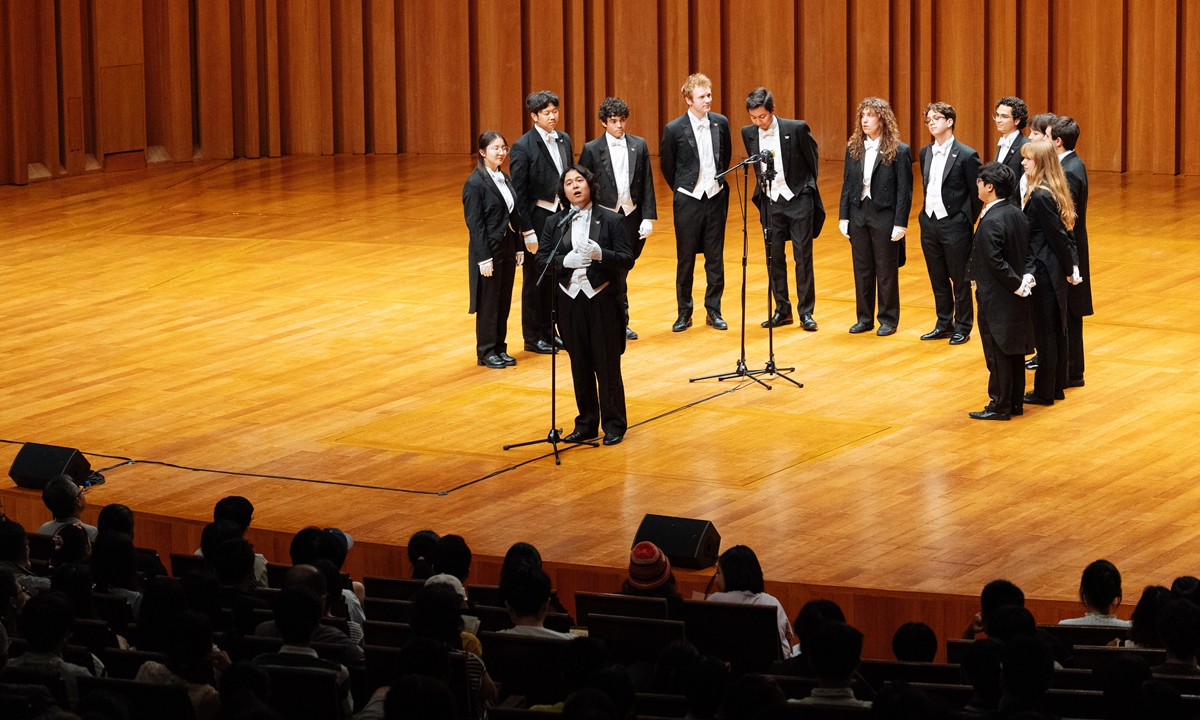
The Yale Whiffenpoofs perform at the National Centre for the Performing Arts in Beijing on August 12, 2026. Photo: Li Hao/GT
The work was shared by Eunice Oh, the first woman to serve as musical director in the Whiffenpoofs' history. Together, Oh and Zhang led the group through the process of learning the Chinese repertoire.
Hearing the Beijing audience join in gave that work an immediate payoff. "I really loved being able to sing with the audience," Oh told the Global Times. "It was very heartwarming."
Getting there required some work. "I think it's a little bit difficult, just because it's so different from the sounds we make in English," Oh said. Zhang taught the group not only how to pronounce the words but also what the lyrics meant. The process was nevertheless enjoyable, and "definitely worth the effort we put in," she said.
The response was often immediate. At performances across China, those in the audience who knew the words sang along.
"That was when we could feel the power of music transcending language divides," Zhang said. "No matter where we come from, or whether an ocean lies between us, we share a love of music and a love of life."
Other songs opened different conversations. After the group performed "Midnight Train to Georgia," a few people in the audience approached the singers to ask about a dance sequence in the number. The answer led to discussions of Hollywood and American popular culture. Chinese students, in turn, introduced Peking Opera and traditional instruments including the
pipa,
suona and
guzheng.
The songs gave the two groups something concrete to ask each other about.
Echoes across timeThe Whiffenpoofs' China tour this year was built around a piece of the group's own history.
In 1985, at the invitation of the Chinese People's Association for Friendship with Foreign Countries, the Whiffenpoofs made their first trip to China, performing in Beijing, Nanjing and Guangzhou. Parts of the journey were later preserved in the short documentary
Perfect Harmony: The Whiffenpoofs in China.
They arrived in a country still in the early years of reform and opening-up, when even Coca-Cola was a novelty for many Chinese people, and so was the sight of a group of young American visitors.
The "Whiffs" climbed the Great Wall, spoke with Chinese university students, stopped to watch elderly residents practice tai chi, and sang in the open air at the Temple of Heaven.
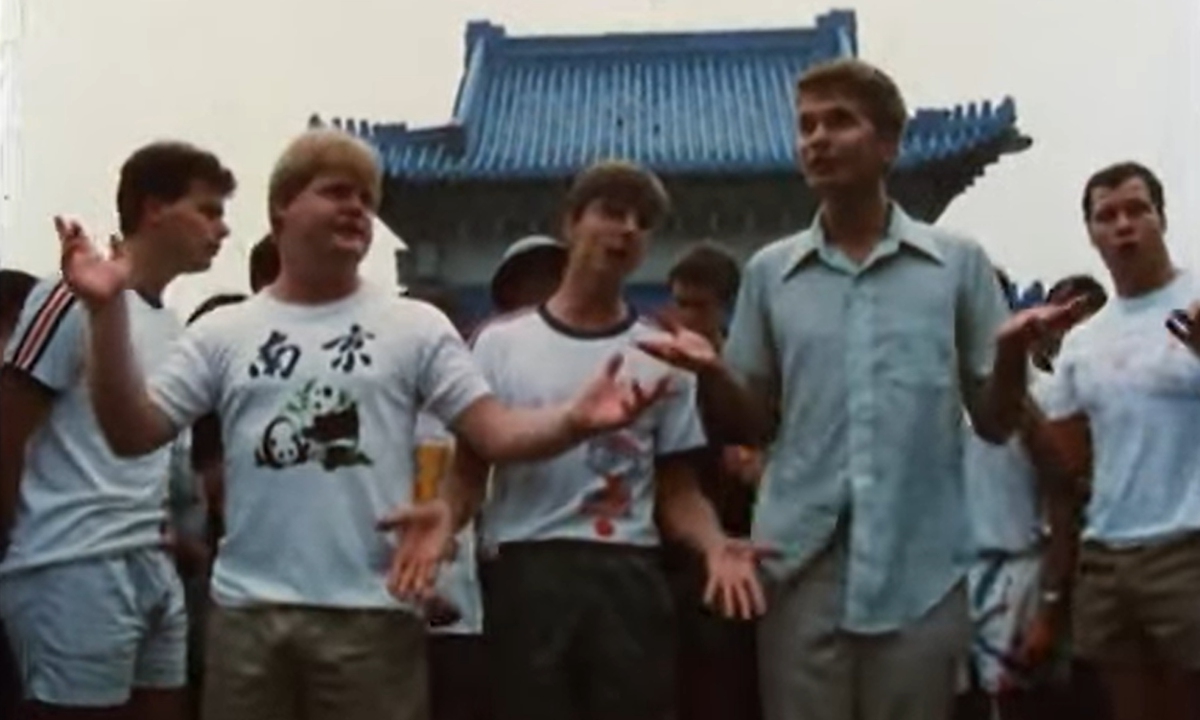
The Yale Whiffenpoofs perform in China during their 1985 tour. Photo: Screenshot from the documentary
Perfect Harmony: The Whiffenpoofs in ChinaFour decades later, the Temple of Heaven offered the clearest point of return. The singers stood where their predecessors had performed and sang the same song.
"Just as they had sung at the Temple of Heaven, we sang the same song again in the same place," Zhang said.
The reprise linked the two tours, while the rest of the itinerary showed how much more geographically varied the 2026 journey had become.
The new route extended well beyond major cities. In Zhaoxing Dong Village, Southwest China's Guizhou Province, the group performed with local choirs and listened to the Grand song of the Dong ethnic group, a polyphonic tradition performed without a conductor or instrumental accompaniment. The encounter brought together two distinct a cappella traditions.
Passed down orally within Dong communities, the tradition includes imitative songs that reproduce sounds from the natural world, particularly animal calls. It was inscribed on UNESCO's Representative List of the Intangible Cultural Heritage of Humanity in 2009.
Members of the Yale Whiffenpoofs perform with local singers in Zhaoxing Dong Village, Southwest China's Guizhou Province, on March 23, 2026. Photo: ICMembers also learned to play the Dong pipa, tried batik dyeing and joined residents in pounding glutinous rice, according to the Xinhua News Agency.
Zhang said stops such as Zhaoxing and Zhangjiajie gave his fellow singers a view of "a more diverse and different China."
The contrast between major cities and smaller villages became one of Oh's strongest impressions. "Being able to see the diversity that China has to offer, from these big cities to smaller villages, was incredible," Oh said. "I think it is a place unlike any other place I've been in my life and in my travels," she said.
Beyond the stageExchanges with Chinese students ran through both visits. During the March tour and the group's return to Beijing in August, the Whiffenpoofs visited universities, performed with student choirs and talked with peers close to their own age.
"Although we grew up in very different countries, the fact that we can all stand together and sing a song really brought us together," Oh said. "Music is a way to connect people."
Yet the connection did not end with the performance. Conversations with Chinese students gave the visitors access to the ordinary details of lives that rarely appear in international headlines.
"It's a very cool way to understand how people similar to our age have been experiencing their lives, and to share that with one another, and just learn about their culture and traditions and background in a way that is very different from just looking on social media or looking in a history textbook," Oh said.
Chinese students described the exchange in similarly concrete terms. Pan Lutong, a Nankai University student who performed with the Whiffenpoofs, said it was her first opportunity to work closely with a choir from an overseas university.
Outside rehearsals, the students also visited Tianjin's Ancient Culture Street together.
"This kind of exchange between students gave us a valuable friendship," Pan said.
The encounters continued in Beijing. On August 10, shortly after arriving in the city, the Whiffenpoofs rehearsed "The Brightest Star in the Night Sky" with the Beijing Wuzi University Riparian Choir.
"Through music, students from China and the US formed friendships and gained new cultural perspectives and musical experiences," a representative of the Riparian Choir told the Global Times.
The August 12 concert was the final performance of the group's year together. Two weeks later, Zhang said, the members would return to Yale, resume their studies and leave the road to another generation of Whiffenpoofs.
That work may continue after the tour. "This experience has shown me the importance and meaning of cultural exchange and face-to-face interaction," Zhang said. "I hope to continue working in this field in the future."
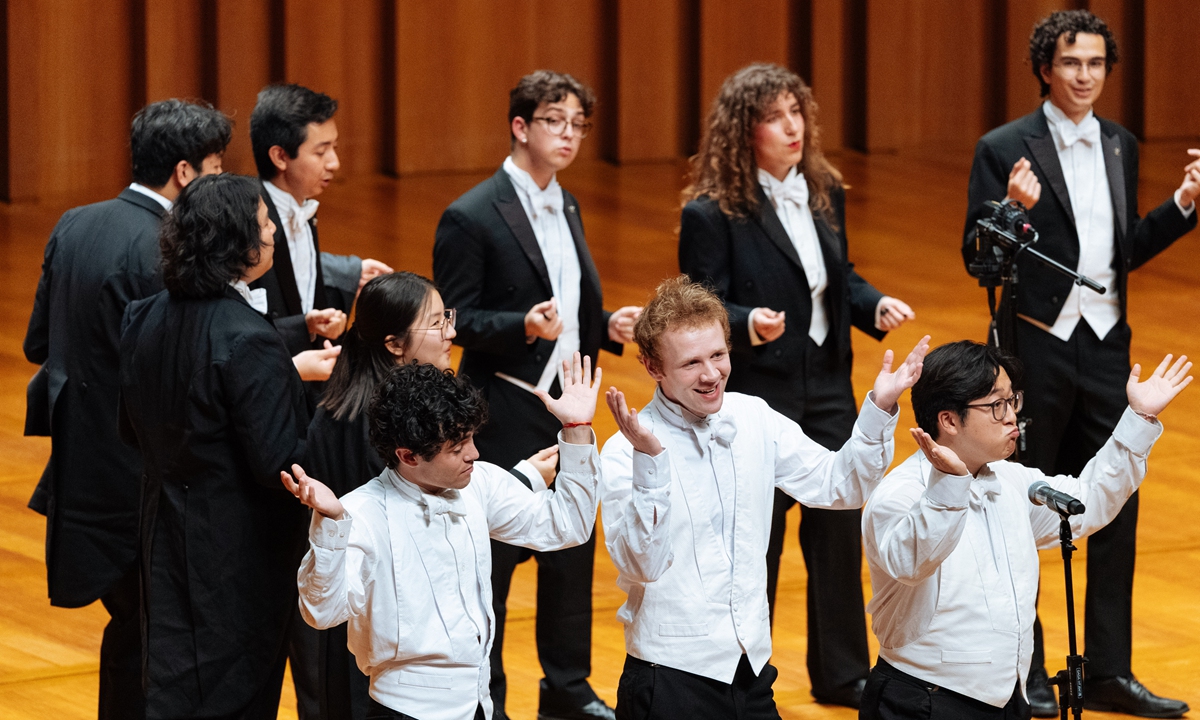
The Yale Whiffenpoofs perform at the National Centre for the Performing Arts in Beijing on August 12, 2026. Photo: Li Hao/GT
。 中国小康网讯 4月18日,《湖州市生态文明典范城市建设促进条例》发布仪式在北京举行。该《条例》包括总则、规划与布局、绿色低碳发展、生态保护修复、污染防治、生态产品价值实现、生态文化建设、生态环境治理体系和治理能力建设、法律责任、附则,十章七十九条,系统回答了生态文明典范城市“是什么”“干什么”“怎么干”的问题。《条例》将于2024年5月1日起正式施行。发布仪式 张剑/摄生态文明建设是党中央高度关注的“国之大者”。“行遍江南清丽地,人生只合住湖州。”湖州天生丽质、禀赋优越,地形地貌多样、自然山水清远、生态要素齐全,是绿 水青山就是金山银山理念诞生地、中国美丽乡村发源地、绿色发展先行地。湖光山色 张锦国/摄“青山碧水‘养眼’、蓝天清风‘养肺’、净水美食‘养胃’、诗意宜居‘养心’,更滋养了一方百姓,‘好风景’里正在不断兴起‘好经济’、催生‘好钱景’。

二 | ”湖州市委书记陈浩在发布会上形象地描述生态湖州图景。从实施太湖治理“98 零点行动”开始,湖州在生态环境治理保护和生态经济化、经济生态化的道路上经历了积极探索(1996年—2005年)、改革创新(2005年—2014年)、全面推进(2014年—2020年)、蝶变跃升(2020年至今)四个阶段,“在湖州看见美丽中国”的城市品牌深入人心的同时,生态文明看湖州也成了这座城市的鲜明标签。湖州是全国首个地市级生态文明先行示范区、首个生态文明示范区“市、区、县”全覆盖的地级市、全球唯一生态文明国际合作示范区、长三角地区唯一国家可持续发展议程创新示范区,获批首批国家碳达峰试点城市、国家减污降碳协同创新试点城市,因生态文明体制改革、制度创新成效显著获得国务院督查激励。2023年8月15日,首个全国生态日的主场活动就放在了湖州。全国人大常委会委员、环资委副主任委员吕忠梅在发布会致辞中表示,这次发布的《条例》是立足湖州经济社会发展实际需求,认真总结了生态文明建设创新实践,聚焦生态文明城市建设中的重点难点问题,提炼总结规律性认识,上升为具有普遍规范意义的地方法规,对于丰富和发展中国特色的生态环境法律体系,为国家立法积累实践经验也具有积极意义。她希望湖州能够胸怀国之大者,切实扛起使命担当,努力形成一批具有湖州辨识度的标志性成果,为各地的生态文明建设提供示范样板。

三 | 生态文明建设,湖州有哪些标志性成果?能为全国提供哪些示范样板?结合这场发布会上的介绍和场外采访,有四个方面值得大家关注。——下好了生态文明制度建设的“先手棋”。早在2016年,湖州就颁布实施了全国首部生态文明先行示范区地方法规《湖州市生态文明先行示范区建设条例》。

四 | 在这部“龙头法规”的带动下,湖州探索构建立法、标准、体制、数智、文化“五位一体”制度体系。地方立法上,出台了美丽乡村、绿色金融等11部生态文明地方性法规;标准制定上,发布生态文明建设地方标准112项,12项上升为国家标准;体制架构上,创新组建市委生态文明建设委员会;数智赋能上,开发“工业碳效码”“生态警务”等应用;文化培育上,成立全国首家生态文明干部学院,全域开展“绿色细胞”创建行动,创新开展“绿色低碳生活指数”的测评。生态治理由“事”向“制”跃升的背后是生态文明建设的系统思维,形成的是“党委领导、政府主导、企业主体、公众参与”的合力。2022年6月,浙江省第十五次党代会赋予了湖州“建设生态文明典范城市”的新目标新定位。对照新要求,本次发布的《条例》是在原有“龙头法规”上的迭代升级,为湖州打造美丽中国集成之地、浓缩之地、经典之地提供法治保障。——产业,产业,还是产业!“《条例》中科技创新、新兴产业的‘浓度’很高。

五 | ”国务院发展研究中心资环所副所长常纪文接受记者采访时说,绿色发展是高质量发展的底色,新质生产力本身就是绿色生产力。学生态文明的湖州经验,就要学它如何将重视生态文明建设的意识扎扎实实落到产业转型发展上,落到绿 水青山就是金山银山的转化上,落到生态产品价值的高效实现上。

六 | 吉利未来工厂 谭云俸/摄湖州市委副书记、市长洪湖鹏在发布会上介绍了不少湖州的典型案例。比如,在“一产”方面,湖州针对全市100万亩竹林,抢抓“以竹代塑”等机遇,大力发展高科技竹产业,推动一二三产深度融合,整体产业规模已经达到300亿元。

七 | 在“二产”方面,湖州是唯一以绿色智造为主题的全国试点示范城市,通过深入实施“腾笼换鸟、凤凰涅槃”等攻坚行动,推动了传统产业高端化、智能化、绿色化转型。

八 | 以湖州市全国重要铅蓄电池生产基地——长兴县为例,通过两轮整治提升,原有的175家企业减少到17家,但整个产业产值和税收分别增加到原来的13倍和27倍,同时,整体环境影响得到控制,打造形成了循环经济新模式。又比如,在“三产”方面,利用废弃矿坑,湖州建成了目前全亚洲最大的旅游综合体——太湖龙之梦乐园,总投资达251亿元,拥有客房2.8万间、演艺席位7.5万个,并且通过利益联结机制,既促进了经济发展,又富裕了一方百姓;安吉县梅溪镇红庙村,由入乡发展的青年大学生创业打造的“深蓝计划”咖啡馆,开业两年客流量超70万人次,去年村集体因此增收40万元,带动村民增收近500万元。青年在村2023年,湖州市地区生产总值再上新台阶,达到4015亿元,增长5.8%。在全国先进制造业百强市当中位列第27位,所辖5个区县全部入围浙江省工业强县。

九 | ——管用的载体抓手很重要。法律的生命力在于实施,法律的权威也在于实施。“能够落地、能够行得通、能够管用。”这是生态环境部首席法律顾问别涛对《条例》的评价。这其实也是湖州生态文明建设的一个重要秘诀。

十 | 2022年起,湖州创新设置了“在湖州看见美丽中国”实干争先主题实践总载体,推动生态文明典范城市的打造。

十一 | 在这个总载体下,子载体的创新都是实招、很见成效。比如,全国首个地市级“生态鼎”夺鼎机制,以差额竞争、末位淘汰、一票否决的方式传导压力,推动各地在生态文明建设上比学赶超、赛马争先。比如,创设的全媒体《看见》监督栏目主动揭短,而且一地曝光、全域整改,让湖州天更蓝、水更清、山更绿、环境更优美。比如,区县标志性点位“四季看变化”,通过春看谋划、夏看热潮、秋看攻坚、冬看蝶变来见证和塑造一个又一个生态文明典范城市的标志性成果。——核心是生态惠民、生态利民、生态为民。坚持把人民群众得实惠作为推进生态文明建设的关键着力点,《条例》的形成就是个典型。湖州市人大常委会主任孙贤龙在发布会上介绍说,为了做好开门立法,湖州市人大常委会扎实践行全过程人民民主,综合运用实地调研和召开论证会、听证会、民主协商会等组织形式,积极借助网络、报纸等新闻媒体,充分发挥区县人大和基层立法联系点作用,广泛收集各地各方面意见建议600余条,将“群言群语”提炼为“法言法语”。所以我们在《条例》中不仅能看到涉及产业发展的“硬核内容”,也能看到为了让市民避免都市光污染看见星空而启动的“星空保护工程”这样的温暖条文。为什么湖州的百姓会这么支持?原因就是他们在生态环境的保护中尝到绿色福利,从生态经济的发展中获得绿色效益,从生态城乡建设中拥有绿色品质。

十二 | 如湖州在全国率先建立的“两山合作社”标准化运营机制,探索形成了“五统一”和“两入股三收益”模式(即统一政策制度、标准体系、品牌名片、运营系统、交易平台和资源入股、资产入股,挣薪金、分股金、拿租金),引入社会资本参与生态资源开发和价值转化。

十三 | 20个市、区县和乡镇三级“两山合作社”带动投资近 90 亿元,为村集体、农户增收 1 亿余元。再比如“村游富民”的湖州模式,2023年湖州市乡村旅游经营总收入超130亿元,连续7年位列浙江省第一,全市乡村旅游直接从业人员达到了5.86万人。

十四 | 因为乡村旅游,老百姓腰包鼓了,村子富了,经营性收入80万元以上的行政村占比已达到85%以上。2023年,湖州城乡居民人均可支配收入分别达到74400元和47455元,收入比缩小至1.57:1,是全国城乡发展最均衡的地区之一。幸福湖州 张锦国/摄对于百姓而言,满眼皆生态、时时见生态、生态有价值,才会更加坚定心中有生态、自觉行生态。2021年起,湖州连续三年发布“绿色低碳生活指数”测评百姓生活方式绿色转型的实现程度,分数逐年提高。节约能源、垃圾分类、公交出行、光盘行动、绿色消费等等行为习惯的背后,是百姓已然入脑入心的生态文明价值观。“这就是生态文化建设的力量。”在中央党校社会和生态文明教研部生态文明建设教研室主任李宏伟看来,生态文化在湖州可不是个看不见摸不着的概念,它已经被转化成了老百姓实实在在的获得感,认同感。(周宇)编辑:任奕遥。
Current article:http://ee3yz.pisezuibanzoukou.cyou/news/20260826_410011.html
Published on:03:42:04